Paddington Arm, Grand Union Canal (Kensal Road Stretch)
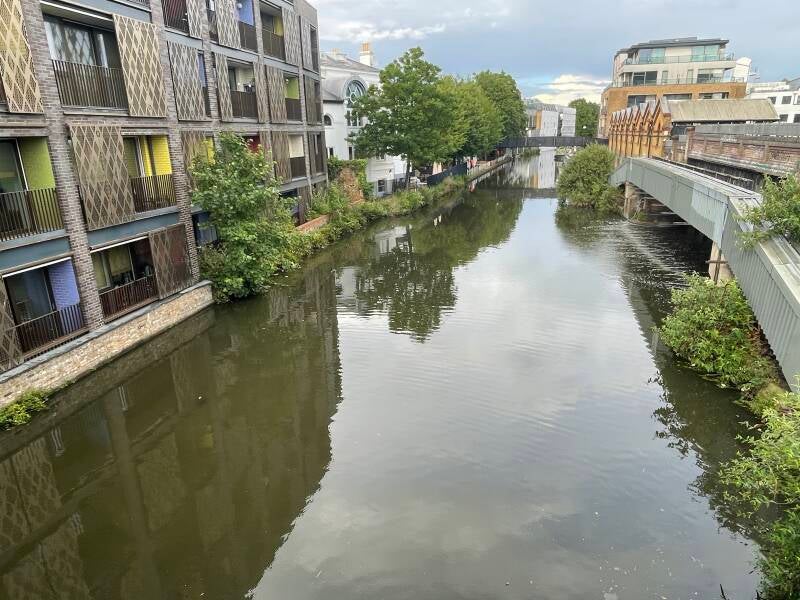
View from Ladbroke Grove Bridge looking East.
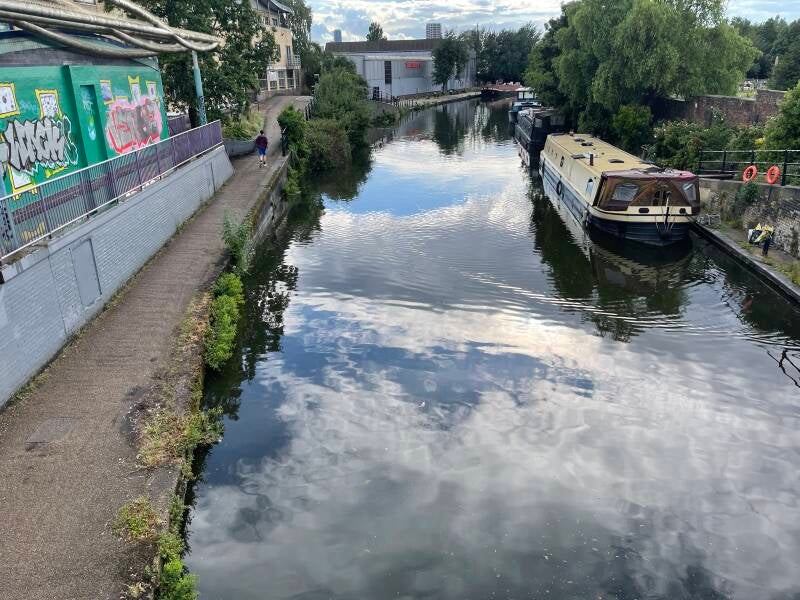
View from Ladbroke Grove Bridge looking West.
The waterway is clear of algae or dirty, oily sludge and waste products floating in the water. The surface of the water is relatively calm, with only light ripples visible. Some vegetation is growing directly at the water's edge and on small protruding sections of bank, creating sheltered areas that are often used by fish and waterbirds.
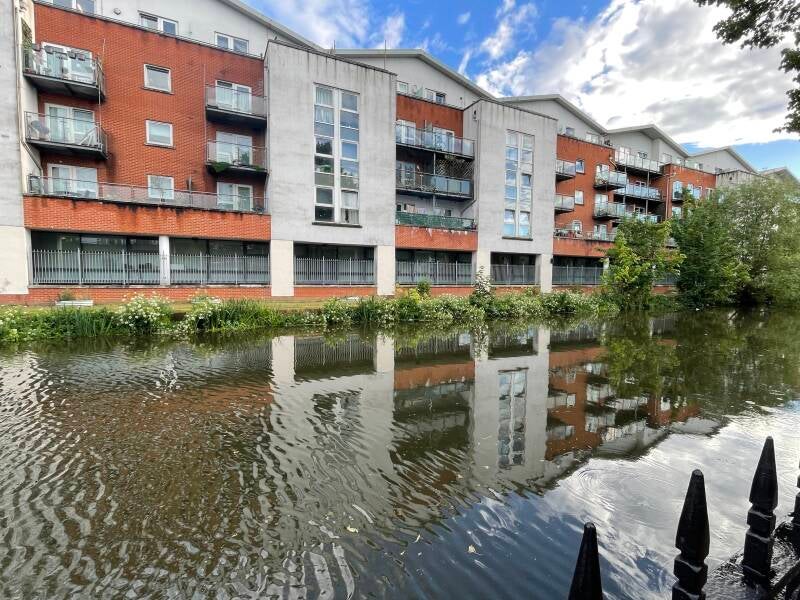
The banks support a healthy amount of riparian vegetation (plants growing along waterways). Shrubs and overhanging trees provide:
- Shade that can help moderate water temperature.
- Habitat for birds, insects, and aquatic wildlife.
- Root systems that can help stabilise the banks.

Here an Eurasian Coot nests under the bank-side vegetation. Eurasian Coot: identified by an entirely dark/black plumage. Distinctive white bill and white frontal shield extending up the forehead. Nesting: Floating nest made of reeds and twigs in the water. It looks like the nesting bird is utilising any floating material like plastic bags.
The canal provides a suitable habitat for waterbirds due to its sheltered waters, abundant bank-side vegetation for nesting and cover, and the availability of food resources such as aquatic plants, insects, and small aquatic animals.
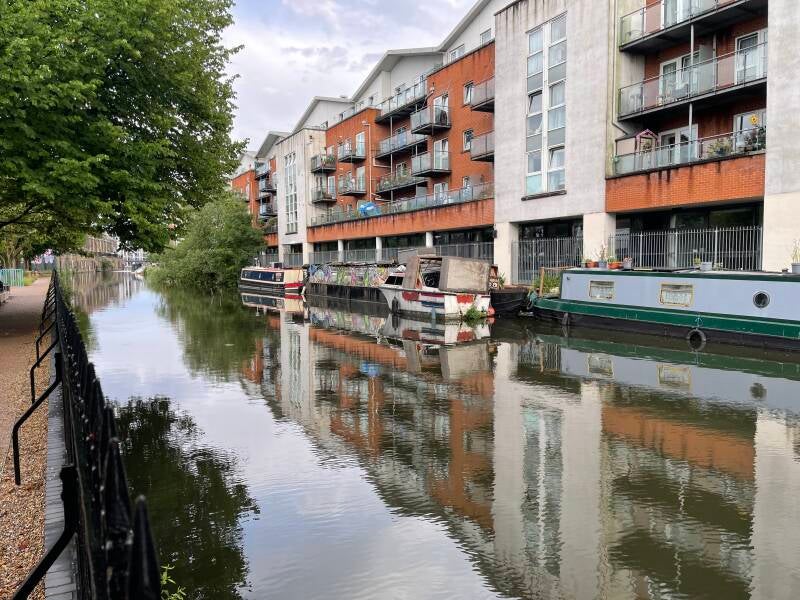

The canal water appears relatively calm, with only light ripples visible. The surface is reflective enough to produce clear reflections of buildings and trees, which often suggests low wind and limited surface disturbance.

View from Ha'Penny Bridge looking East.

View from Ha'Penny Bridge looking West.
The canal water appears slow-moving or nearly still in both directions. In the left hand photo you can see some organic matter from leaves and plants or possibly algae growth.