Greening our neighbourhood one tree at a time!
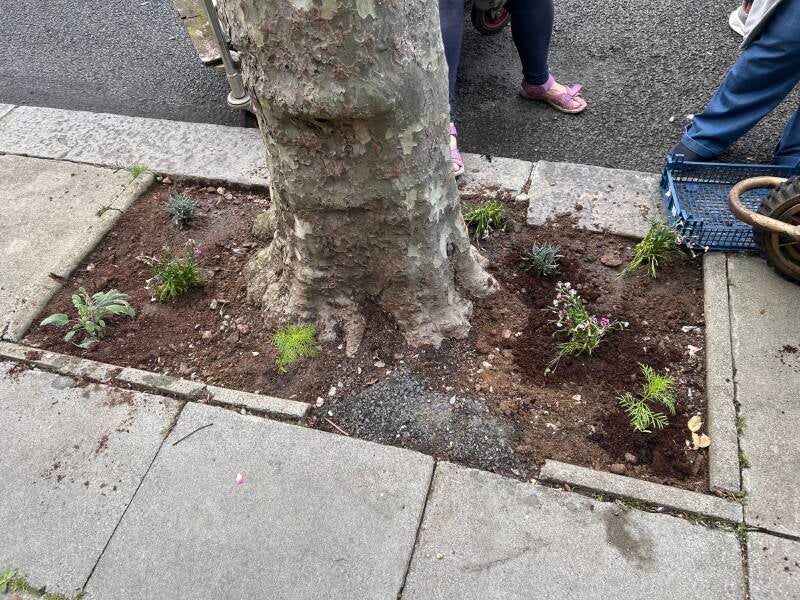
At Queen's Park Trust, we believe that even small actions can make a big difference. One of our key initiatives involves gardening around neighbourhood tree bases. This project helps to beautify our streets, support local biodiversity, reduces dumping of dog poop bags and encourages residents to take pride in their shared spaces. These efforts are vital for creating a more vibrant and welcoming community in Queen's Park.
If you would like to sponsor a tree in Queen's Park, we will come out and plant the tree base pit up for you and you can continue to maintain it.

Road Map of Queen's Park Trust Planted Tree Pits


Tree Pit Advice from Westminster Council
Planting in tree pits is a community-led activity which has many positive aspects on both health and the wider community.
By combining physical activity with social interaction and timeout in nature, fresh air and hopefully some sunshine, gardening can offer health benefits like:
- stress relief
- help to reduce depression and anxiety
- help to prevent cognitive decline
In the community, it can improve the appearance of streets, bring benefits to biodiversity and can deter dumping, vandalism and other anti-social behaviour. It can also provide a focus for residents to work together to care for their local environment.
The advice on these pages aims to help residents improve the success of their community gardening projects, and to ensure the safety of the highway, and the health of the existing trees.
As this is a community-led activity, residents should be aware that the council does not grant permission for gardening in tree pits. This means that works are undertaken at resident's own risk, and we can't provide funds for planting in tree pits or pay for the upkeep of plants.
Whilst working in tree pits, residents should also be aware that there might be discarded sharp items, toxic waste, and other unpleasant materials present, so suitable protective gloves or other equipment may be needed.
Tree pit preparation
Before planting can start, read the information below about the different surfaces used around tree pits and what to look out for. We've also compiled some tips about the best plant species for a successful project.
Soil surface tree pits
Some tree pits are not covered with surface materials, so are easier to cultivate. Residents are encouraged to use the existing soil in these tree pits, rather than remove it.
Removal of any weeds and carefully tilling the soil will loosen the top surface. If the level of the tree pit is lower than the pavement level, new clean topsoil could be added, carefully working the new soil into the tree pit with hand tools to avoid damage to tree roots.
The final tree pit surface should be at the same height as the surrounding pavement.
Self-binding gravel tree pits
Many tree pits are surfaced with self-binding gravel. If this is removed, it should be disposed of in domestic waste, and backfilled with clean topsoil to match the level of the pavement. Again carefully working the new soil into the tree pit with hand tools, avoiding damage to tree roots.
Asphalt or resin-bound tree pits
Tree pit surfaces such as asphalt or resin-bound gravel are sometimes installed for highway safety reasons, so should not be removed.
Planting tips
It is important to retain the soil level in the tree pit at the same height as the pavement. Raising soil levels can lead to stress to or death of trees, and a drop in levels can create a trip hazard.
Raised edging should not be installed around tree pits, as it is also a trip hazard and can cause accidents for pedestrians.
Planting around existing trees which have been in the ground for at least 4 years is not likely to be harmful to them, but planting around new trees is not encouraged, as competition for water and nutrients from other plants can prevent the successful establishment of new trees, and there is also a higher risk of physical damage to their roots.
Landscaping materials such as pots, stones, pebbles, or figurines should not be added into tree pits as they can be used in anti-social behaviour activities.
Plant selection
You should try to choose the right plants for the environment:
- Plants with benefits to wildlife
- Plants that will enhance the appearance of the street
- Plants that minimise competition for water and nutrients with the existing trees.
You should also choose the right plants for the growing conditions:
- Robust, drought-tolerant species
- Plants that can survive soil conditions with low nutrient levels are likely to be more successful than more tender plants.
- If planting is intended in tree pits containing mature trees, shade-tolerant species are more likely to be successful.
Avoid climbing plants and shrubs, as they can create competition for water resources with existing trees. Climbers can also prevent us from assessing the condition and safety of the trees.
Instead, try to use wildflower seeds, bulbs, annuals and perennials.
Plants with a compact growing habit are a better choice than tall or wide-spreading specimens, so that the ultimate height and spread of the plants do not cause obstructions to the footway or highway.
Wildflower seeds are an inexpensive option and are easy to grow. Seeding with a wildflower mix has the benefit of encouraging insect pollinators, and the plants are less vulnerable to theft or damage than more showy plants. Seeds are best planted in early spring.
Bulbs and corms such as snowdrops, small daffodils and narcissi and cyclamens are best planted in the autumn.
Bedding plants such as marigolds and geraniums, and perennials such a small periwinkle and salvia can create a colourful display. Unfortunately, these plants tend to be more vulnerable to theft or vandalism.
Using seeds, plug plants or plants sold in small pots is advisable, in order to limit the amount of excavation needed, and so avoid damage to tree roots.
Make sure to read all of the specifications and planting instructions on the seed or plant packaging before planting in a tree pit.
Maintenance and watering
Most plants will need some maintenance. Depending on the weather and the plants selected, this might include:
- regular watering during the summer months
- weeding
- deadheading to ensure the longevity of flowering
- removing dead annual plants
- cutting back plants that encroach over the footpath
- removing litter
- replacing plants that have died
Working with neighbours or a local resident’s association may help to share the responsibility for maintenance.
Herbicides or pesticides should be avoided, in the interest of biodiversity.
Tree and highway maintenance
We have a duty to carry out various operations to ensure the cleanliness and safety of our roads and streets, and sometimes to improve their condition.
This includes highways remedial works, street cleaning and tree maintenance, all of which can impact upon community gardens in tree pits.
We cannot accept any liability for loss of or damage to planting as a result of our work. This means:
- if the planting is weedy and unkempt we may remove it without notice
- litter may need to be removed by our street cleaners, which could cause or loss of or damage to plants, but tying a green ribbon around the tree will help operatives recognise if planting has been undertaken
- where trees have to be removed, this will result in the unavoidable removal of plants, as the stump and roots of the tree will need to be removed for future replanting
- pruning trees may also damage plants
- repairs, alterations or improvements to footpaths may result in the removal of or damage to plants